

This information was developed in consultation with leading Canadian gynecologic oncologists and reviewed by Alicia Tone, PhD.

What are the types of uterine cancer?

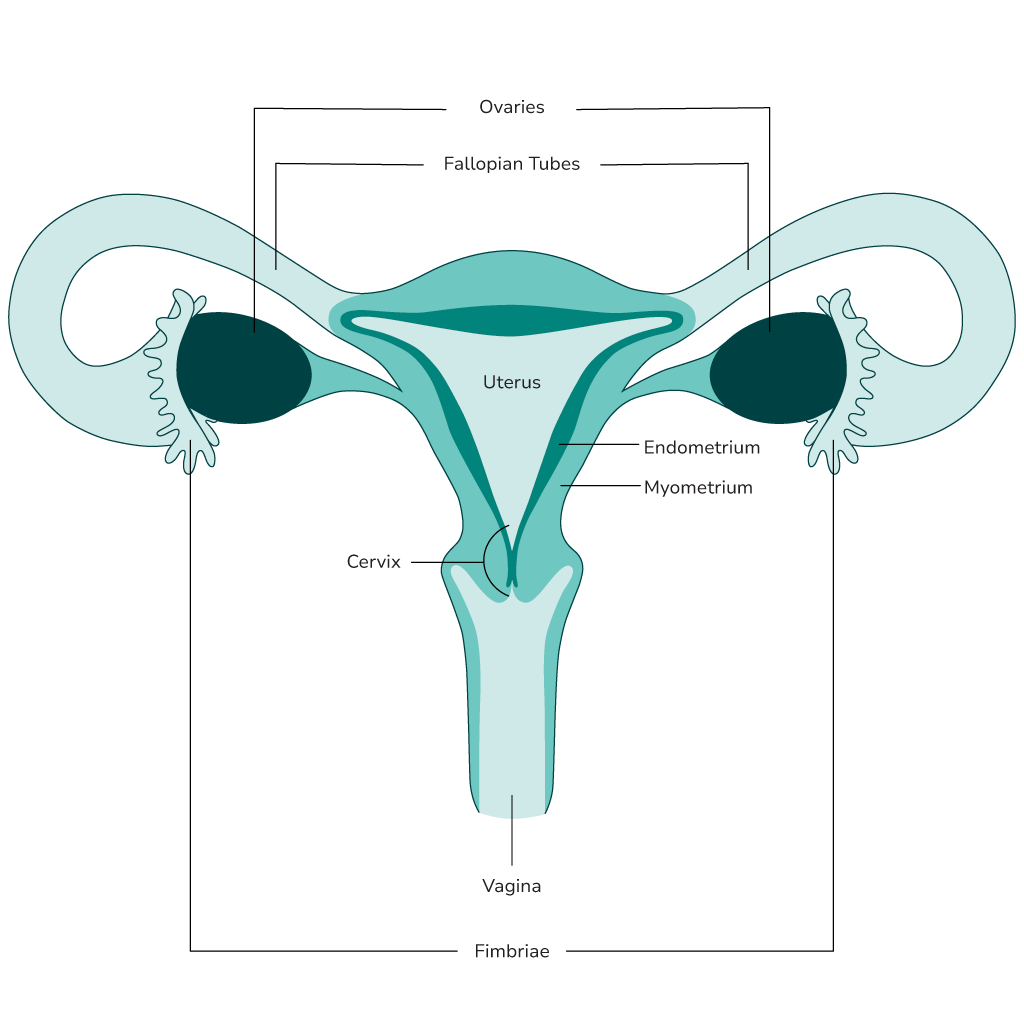
Cancer in the uterus falls into two main types: endometrial cancer, which begins in the inner glandular lining of the uterus (the endometrium) and makes up about 95% of cases, and the much rarer uterine sarcomas, which start in the muscle layer of the uterus (the myometrium) and account for only 5% of cases. When people talk about uterine cancer, they are usually referring to endometrial cancer.

What follows is information about endometrial cancers. More information about uterine sarcomas can be found here.

What are endometrial cancers?

Endometrial cancer begins in the inner glandular lining of the uterus (the endometrium) and makes up about 95% of cases. It is the most common gynecological cancer in Canada, with 8,600 Canadians diagnosed in 2024, according to IHE’s Case Study on Endometrial Cancer in Canada.

Before deciding on a treatment plan, a pathologist looks at the cancer tissue under a microscope to understand its type, how aggressive it is, and how far it has spread. They also do molecular tests, like checking for certain proteins or changes in the DNA. This information helps doctors understand:

  • How likely surgery alone will be enough to treat the cancer
  • Whether additional treatments are needed
  • The risk of the cancer spreading or coming back


What are uterine sarcomas?

About 2–5% of uterine cancers start in the muscle of the uterus (myometrium) or in connective tissue, rather than the uterine lining. These rare cancers are called uterine sarcomas.

The main types of uterine sarcomas are:

How are uterine sarcomas treated?

As with endometrial cancers, surgery is often the main treatment for uterine sarcomas, with other options like radiation, chemotherapy, hormone therapy, or targeted therapies used in combination, depending on the specific characteristics of the cancer and the individual’s circumstances.

Support and education

Being diagnosed with endometrial cancer, uterine sarcoma, or facing a recurrence can feel overwhelming – know that you are not alone. It’s natural to have many questions and emotions during this time.

Understanding the complex experiences women face when navigating their healthcare is what we do best.  As someone facing endometrial cancer or uterine sarcoma, you are welcome in our community.