


For decades, ovarian cancer has often been detected too late, after it has already spread. This means that many Canadians are diagnosed at stages 3 or 4, when treatment options are limited. Today, new research is challenging long-held assumptions and opening the door to earlier, more precise detection.
Dr. Andrea Neilson is a gynecologic oncologist and researcher in Vancouver, B.C., who sees firsthand the devastating impact of ovarian cancer. “The majority of the ovarian cancer patients I have are diagnosed at an advanced stage,” she explains. “All efforts to find a non-invasive way to diagnose this cancer early have been in vain and we haven’t been successful in moving the needle.”

Dr. Andrea Neilson, British Columbia
An Innovative Approach: Looking Directly at the Source
Dr. Neilson and her team are taking what she calls an “out of the box” approach.
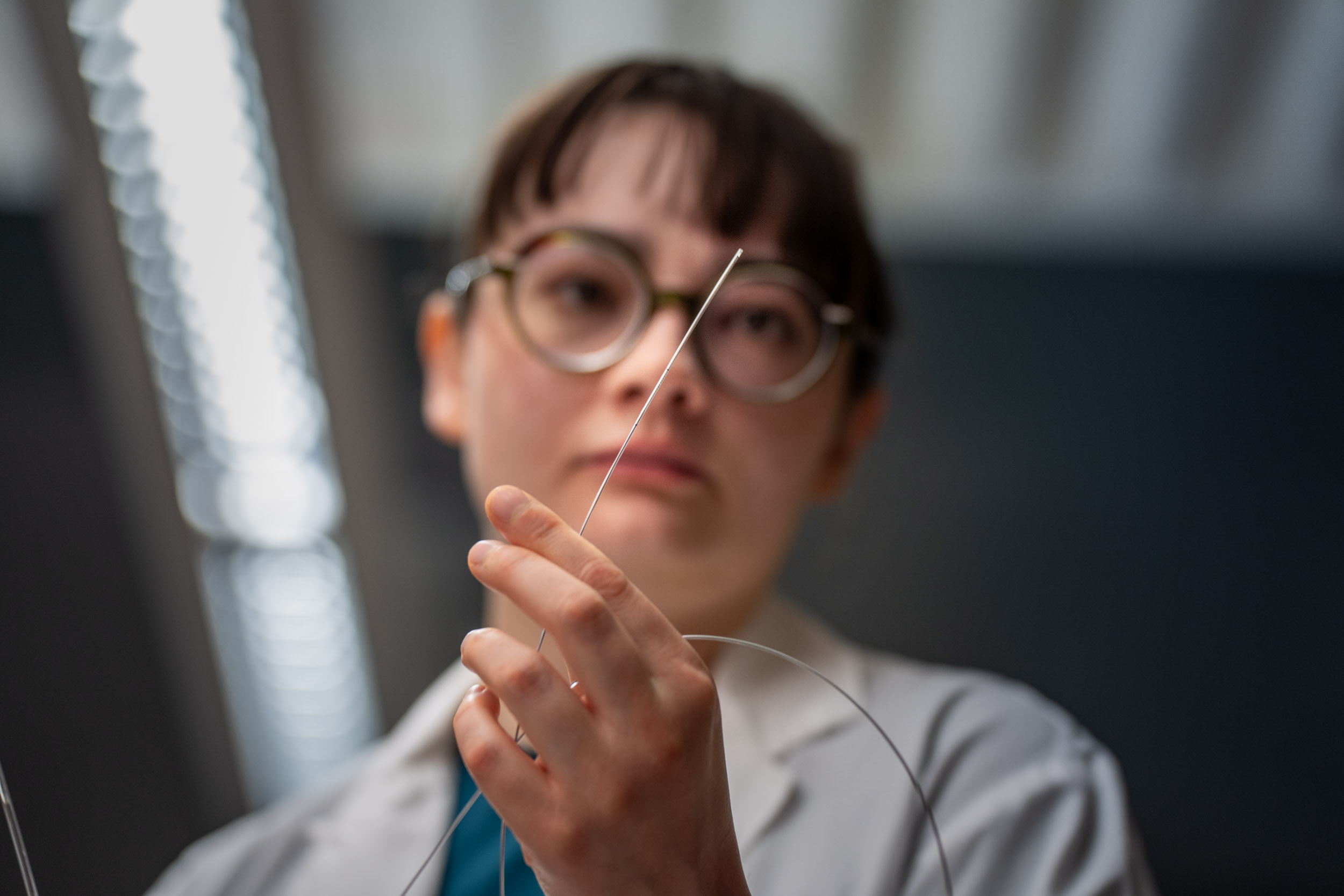
They use a small tool called a hysteroscope that helps doctors look inside the uterus. Then they gently guide a very tiny tube, about one to two millimetres wide, into the fallopian tube, using a tiny camera – called an optical coherence tomographer – to collect images.
“What optical coherence tomography does is essentially shine a little laser light out of the tip of the catheter, and it collects whatever reflects back. We use that to make a three-dimensional image by spinning and pulling back the imaging core inside this catheter,” explains Jeanie Malone, the postdoctoral fellow at BC Cancer Research Institute responsible for developing the technology that makes this research possible.
This allows them to:
- See the full length of the fallopian tube
- Spot very tiny changes before a tumour forms
- Possibly find cancer before it spreads
Importantly, this method requires no additional incisions and is designed to minimize downtime, discomfort, and recovery.
The team has already successfully imaged fallopian tubes after they were surgically removed. Now, they are advancing to in-person (in vivo) testing, carefully refining the technique to ensure it is safe, efficient, and comfortable for patients.
The goal is real-time imaging that can reassure someone they are cancer-free or identify an early cancer when immediate action can save their life.
The Ideal Outcome
“The ideal outcome is being able to detect these cancers before they become cancers and save women’s lives,” Dr. Neilson says.
High-grade serous ovarian cancer, the most common and aggressive form of the disease, often does not start in the ovary at all. Instead, research over the past decade has shown that it frequently originates in the fallopian tubes, changing how doctors think about the disease.
“This is a tool which gets us closer to the source of those early ovarian cancers, the ends of the fallopian tubes,” says Jeanie. By allowing doctors to evaluate the potential for cancer or detect it earlier, this tool has the potential to become an early screening tool used in combination with genetic testing and advances in personalized medicine. This could potentially help guide treatment decisions for people with a hereditary disposition to ovarian cancer, enabling them to make informed choices about their care.
Finding Ovarian Cancer Before it Starts
Dr. Andrea Neilson and her team in British Columbia share the potential impacts of their research
Dr. Andrea Neilson
"Women’s lives matter. These patients that I work with, they are mothers, wives, sisters, and productive members of society that deserve the best care."
Why This Research Is Different
While imaging the uterus with a hysteroscope is routine, navigating a tiny catheter through the narrow and uniquely shaped fallopian tube requires expertise and precision, as each person’s anatomy is slightly different. Safely reaching the very end of the tube demands technical skill and careful refinement of the procedure.
In parallel, the team is also exploring fluid sampling techniques to detect genetically mutated cells, combining imaging with the analysis of these cells.
The combination of this new understanding of how this cancer originates and advancements in available technology is what makes this advancement different. Ten years ago, many of these cancers were simply labelled “ovarian cancer.” Today, we understand far more about where they begin, and that knowledge is changing what’s possible, with discoveries building on one another, gaining momentum as we understand more about these cancers.
Why Ovarian Cancer Is So Difficult to Detect
Genetic mutations can occur in cells inside the fallopian tube long before a tumour forms. These abnormal cells may leave the tube before any detectable mass exists. That means conventional tools like blood tests (like the CA-125), ultrasounds, or CT scans often cannot find the disease at its earliest stage. By the time symptoms appear and the cancer is visible on imaging, it has often already spread within the abdominal cavity.
As with most cancers, stage matters. If detected at stage one, before it has left its site of origin, surgery alone may be enough. Survival rates improve, the need for chemotherapy may be avoided and the risk of recurrence drops dramatically.
The challenge has been finding a way to see the disease before it spreads.
Who Could This Help?
Ovarian cancer is most commonly diagnosed in females in their 50s and 60s, though it can occur earlier. Some individuals carry BRCA gene mutations, which increase the risk of breast and ovarian cancer. For these women, decisions about risk-reducing surgery, such as removing the fallopian tubes or ovaries, can have major implications, including impacts on fertility.
- A reliable early detection tool could provide critical information:
- Reassurance for those who are cancer-free
- Earlier intervention for those with precancerous changes
- More informed decisions about surgery
- Ultimately, more survivors
Building breakthroughs
For the first time in decades, we are closer to changing what an ovarian cancer diagnosis means. But progress like this does not move forward on its own.
Dr. Neilson’s motivation is simple and unwavering: “Women’s lives matter. These patients that I work with, they are mothers, wives, sisters, and productive members of society that deserve the best care and to not have to suffer from these devastating diseases.”
With your support, we can protect this momentum and move closer to a future where ovarian cancer is found early, treated effectively, and no longer takes women from the people who love them.