


Honouring Carol Lee
In honour of World Ovarian Cancer Day, Ron shared how he’s ensuring families have more time together, and what he would say to his wife, if he could talk to her today.
For so many of the most important moments of his life, Ron and Carol Lee McInnis were a team.
They met when they were just 15 years old and would go on to become high school sweethearts. Together they built a life that spanned provinces and decades. Over the years, Ron’s work moved him and his family across Canada, from Newfoundland to Winnipeg, Calgary to Ottawa, and eventually Niagara-on-the-Lake. Throughout all of this, their daughter, Lindsay, remembers Carol Lee as the anchor of their family, creating and nurturing community wherever they landed. An introvert married to an extrovert; Carol Lee had a natural ability to connect with people.
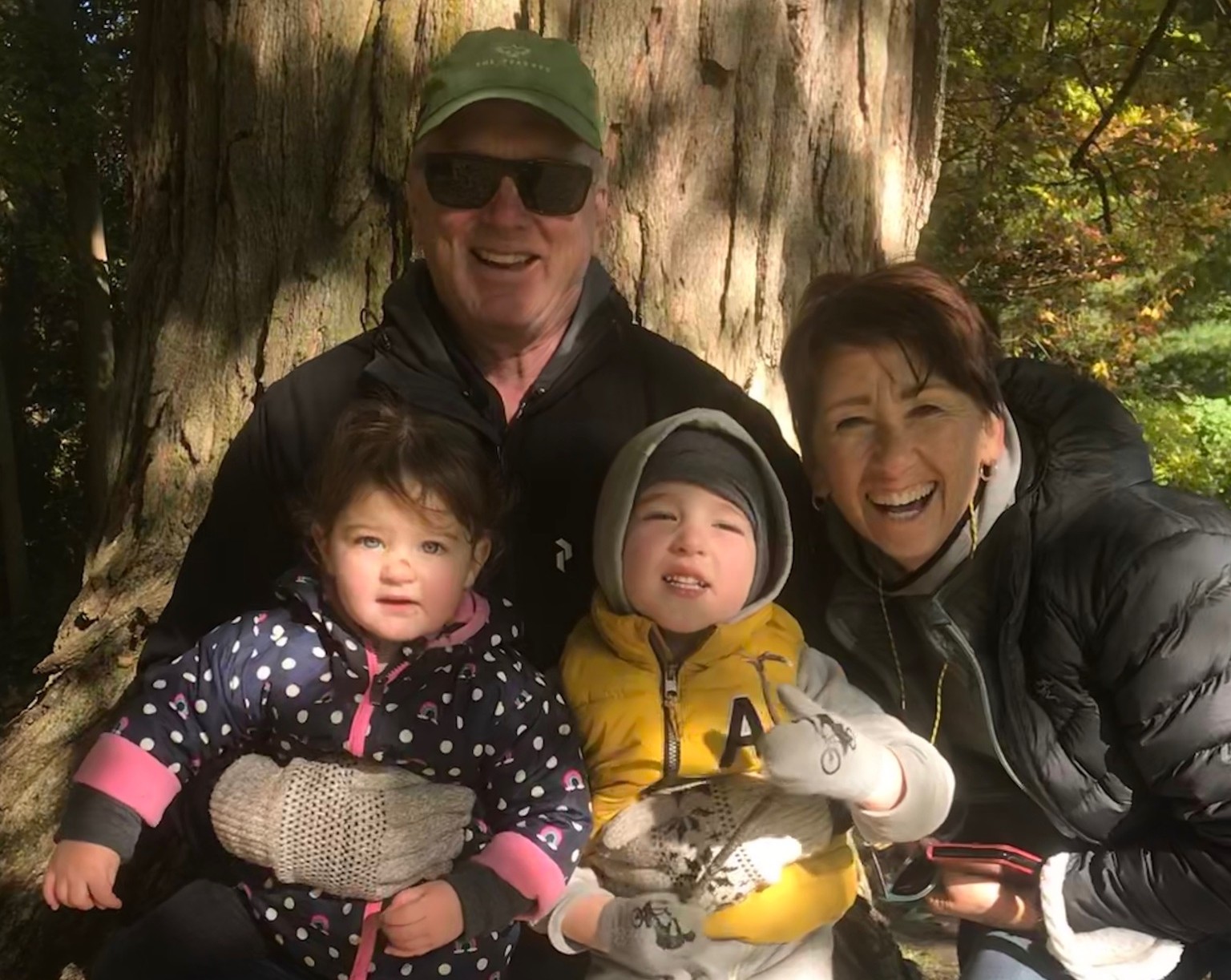

Carol Lee and Lindsay were exceptionally close.
“She carried herself with a quiet confidence, never the centre of attention but not afraid to put herself out there… She was everything I strive to be – patient, kind, thoughtful, and lived her life with purpose,” says Lindsay. “My mom once said becoming a grandmother was her greatest joy because she could simply be present with them, loving fully and freely without carrying the constant worries that come with being a parent. I’m so thankful she was able to experience that joy in her life even though it was cut short.”
A diagnosis that changed everything
Carol Lee was healthy. She exercised. She ate well. She did all the “right” things. When symptoms first appeared, they were initially dismissed as minor digestive issues, and an MRI was scheduled six weeks out. Through connections from his work, Ron was fortunate enough to be able to arrange for imaging the very next morning in New York.
By that afternoon, they had clarity: ovarian cancer.
Carol Lee underwent surgery to remove the tumour, followed by chemotherapy in Hamilton, Ontario. That summer, she was back on the golf course and life was returning to almost normal. Then, at the end of the summer, they learned the cancer had returned, more aggressive than the first time.
It was the height of COVID-19 and hospital restrictions meant that Carol Lee’s family could only speak with her through video calls. When her prognosis became clear in early January, Carol Lee and Ron made the decision for her to go home for palliative care. Within weeks, she passed away on January 20, 2021, just 15 months after her diagnosis.
“Ovarian cancer didn’t just take my mom, it took a piece of all of us – my dad, my husband, and my children. Our whole family was affected, each in their own way,” Lindsay remembers.

Dr. Andrea Neilson, lead researcher on an early detection project
With no reliable early detection or screening methods available, only a few patients are diagnosed early, when treatments are most effective.
Families like the McInnis’s deserve more time with their loved ones, that is why we are funding innovative research into new early detection tools like those being developed by Dr. Andrea Neilson and Dr. Jeanie Malone in Vancouver, British Columbia. These projects have the potential to offer women and those at risk of ovarian cancer the most precious resource we have – time.
By combining advanced imaging techniques that can identify abnormal cells with cutting-edge genetic sequencing technology, Dr. Nielson and her team in are building on scientific discoveries that have shown that most ovarian cancers begin in the fallopian tubes.
Their work combines the use of a hysteroscope containing a light and camera to examine the uterus, then scanning the fallopian tubes with a low-power laser to generate a 3D image. Following this, they use a catheter to flush the fallopian tube with saline, collecting cells that undergo imaging and genetic sequencing.
By collecting these small amounts of genetic material, the research team aims to detect abnormalities in the fallopian tubes early. This could allow them to detect cells before ovarian cancer develops.

What more moments together could mean
“It’s not just the big moments; it’s the quiet ones where her absence is felt the most. The missed conversations, the texts checking in, a favourite meal, the sound of her laughter,” says Lindsay. “I promised myself I would look for her in all those moments. The big ones and the small. Keeping her memory alive is a beautiful way to celebrate her life.”
In sharing her story, Lindsay recollects the moments with her mom she treasures – travelling together to Thailand, the birth of her children – and the moments she wishes she could have shared with her.
5 years after her mother’s passing, Lindsay and her family took a trip Carol Lee often talked about. “My husband is South African, and he and my mom were very close. She always wanted to visit his home country,” she says. For them, the trip is bittersweet, knowing that they are fulfilling something Carol Lee dreamed of, but without her by their side.
Honouring Carol Lee through action
After her passing, the McInnis family began donating to Ovarian Cancer Canada, with the goal of giving families the time that they did not have. As the fifth anniversary of her passing approached, Ron asked himself what that milestone should mean. Not a celebration. Not exactly remembrance alone. Instead, he decided to mark it with action, launching a fundraiser in her name. Within a month, he raised nearly $28,000 from friends, former colleagues, and the communities across the country that Carol Lee helped create.
What stays with him most is how quickly life changed. “You don’t think it’s going to happen to you,” he says. “Until it does.”
This World Ovarian Cancer Day we’re fueling progress to ensure that the moments families share are not cut short.
With greater investment in research, improved early detection tools, stronger awareness of risk factors, and better support for patients and their healthcare providers, we can change the trajectory of this disease. We can create a future where women are diagnosed earlier, have treatments that are more effective, and more time with their families.
Donate today to join us. Together we can give every family more time with the people they love.