


Finding ovarian cancer early is hard; symptoms are vague and tests aren’t always able to diagnose it early.
Many people in our community want this to change. For a long time, science could not find a good way to do this. Now, new research gives us hope. With new science and steady research funding, early detection for ovarian cancer is possible.
Could a blood test find ovarian cancer earlier?
Watch Dr. Mueller and Sydney Shepherd share the progress they’re making at Queen’s University.
Ovarian Cancer Canada is helping lead this important work by funding innovative research projects like mDETECT.
The mDETECT research project, led by Dr. Christopher Mueller and Sydney Shepherd at Queen’s University in Kingston, Ontario, is moving to the next phase of testing after promising early results.
A future where women's health isn't overlooked
We’re not just imagining it – we’re building it. With your donation, we can make sure Canadians facing ovarian cancer have more options.

How the mDETECT Blood Test Works
The mDETECT blood test looks for specific patterns on small pieces of tumour DNA in the patient’s blood. These pieces of DNA appear in the blood when tumour cells die. Early research results show that mDETECT can even tell how much tumour is in the patient.
“Our early results show that we’re much better at identifying ovarian cancer than the ” says Dr. Mueller. “Our mDETECT blood test may better tell the difference between cancer and non-cancerous conditions, reducing false positives and false negatives. With this investment we will now study if our test can actually help women facing ovarian cancer.”
This is why the mDETECT approach is different.
In Canada, many doctors use a test called CA125 to help check for ovarian cancer. This test looks for a protein in the blood. But CA125 levels can rise for other reasons that are not cancer. Some people with ovarian cancer do not have high CA125 levels at all. This means some cancers are missed, and others may lead to extra tests that are not needed.
How Ovarian Cancer Canada Support Helps This Research
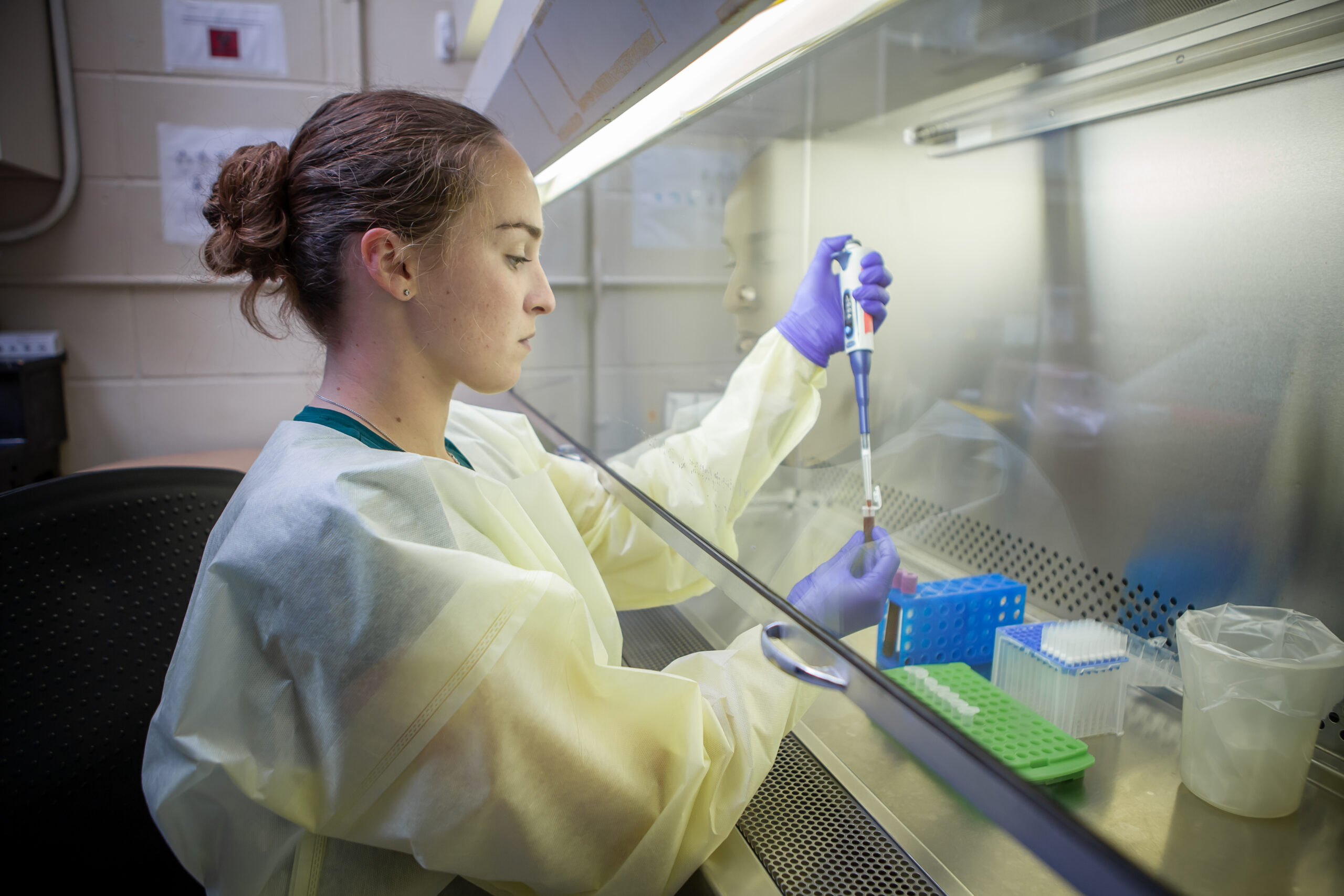
The mDETECT team has already studied the test in the lab. The next step is to see if it can find ovarian cancer earlier in women who have not yet been diagnosed but are being tested for it.
“Funding from Ovarian Cancer Canada has allowed us to take that next step, which is actually to look at patients, to allow us to go into hospital settings and approach those women and get samples from them so we can test it in real life,” says Dr. Mueller.
This funding lets the team test mDETECT in real-world hospital settings, an important step in determining if it could be used to diagnose patients in the future.
“It’s about taking it from laboratory-based experiment out into the real world where we can find women who are being diagnosed and actually validate the test there.”
Why Early Detection Matters
“The problem with ovarian cancer is that its symptoms are very vague,” explains Dr. Mueller.
Ovarian cancer symptoms can seem like other, more common problems. This makes it easy to miss. Right now, there is no strong test to find ovarian cancer early.
Because the symptoms overlap with common conditions, Dr. Mueller highlights the urgency of addressing this gap.
Sydney Shepherd
"Ovarian cancer is often diagnosed in those later stages."
Looking Ahead
If successful, this research could change what it means to face ovarian cancer.
“This research matters because it can change the trajectory of a woman’s disease with ovarian cancer, and it’s how we turn something around, how we go from a disease that is almost always fatal to a disease that is easier to manage and treatable and curable.”
This is the future that Ovarian Cancer Canada is working toward. Early detection research like mDETECT is no longer just an idea. Thanks to new science and donor support, real progress is happening.
By funding projects like this, Ovarian Cancer Canada helps move research from the lab into hospitals, making a real difference for women across the country.
Thank you to the Ovarian Cancer Relief Foundation’s Dawn Ride for their generous support in making this research possible.